How Can Nurseries Add Grafting Capacity Without Rebuilding the Whole Line?
The grafting machines still work. The team knows the process. Orders are growing, but replacing everything would mean writing off useful equipment and taking on a larger installation project than the nursery needs.
Nurseries can sometimes add grafting capacity by expanding parallel workstations and upgrading selected handling interfaces, rather than replacing the entire workflow. The starting point is an audit: what limits accepted output, which assets remain useful and what must change when another station joins the process?
Modular expansion is a design approach, not a promise that any machine can connect to any conveyor. Some equipment may remain independent. Some may need an engineered interface. Other items may no longer suit the required output.
Define What Needs to Expand
Start with the production shortfall, not a proposed machine count. Does the nursery lack grafting time, prepared rootstock and scion, collection capacity or healing space? Adding a station addresses only some of those constraints.
Record the current workflow during representative production. Note accepted grafts, rejects, waiting for material, collection interruptions and time spent changing batches. Follow batches through the agreed healing assessment as well. Use consistent counting rules when comparing the current and proposed arrangements.
If machines regularly wait for seedlings, another grafting robot may spend much of its time waiting too. If grafted plants queue for collection, review that route before increasing the flow into it.
Our four-robot labor and output planning guide covers staffing boundaries and nominal versus accepted output. The question here is different: which parts of the existing installation must change to support the next stage?
Audit Existing Equipment Before Drawing a New Line
List machine models, configurations, documentation, condition, utilities and normal operating duties. Include conveyors, tray stands, collection tables and transport equipment, not just grafting stations.
Put each asset into one of three proposed categories:
- Retain independently: useful equipment that can continue its current task without joining a common control or transfer system.
- Connect after review: equipment worth retaining if its mechanical, control and operating interfaces can be validated.
- Replace or relocate: equipment that cannot meet the new requirement, obstructs access or would require disproportionate modification.
Keeping a machine independent can still protect the investment. An older station might remain a separate production route for suitable batches while new equipment serves a larger repeat order. That is a scheduling option to evaluate, not proof that every old machine should stay.
Ask for a written retained-equipment list in the proposal. "Use the existing conveyor" is incomplete unless the supplier has reviewed its dimensions, support arrangement, condition and required operation.
Add Parallel Stations Without Confusing the Material Flow
In a parallel grafting arrangement, seedlings are assigned to separate workstations. A plant does not need to pass through every grafting robot. Preparation and collection may be shared, but the individual grafting routes still need clear boundaries.
Draw where rootstock trays arrive, where scion material waits and where grafted seedlings leave. Include waste removal, supplies, cleaning access and the route to healing. Mark batch identity through shared collection so that different orders do not become mixed.
Reserve realistic space for a future station, including operator access and material delivery. An empty rectangle on a drawing is not enough if the new position blocks maintenance or forces staff to cross the finished-seedling route.
Check the Interfaces That Can Turn a Small Upgrade Into a Rebuild
The difficult work often sits between machines. Review these interfaces before approving a nursery automation expansion.
| Interface | What to establish | Evidence to request |
|---|---|---|
| Tray and plant presentation | Actual tray dimensions, orientation, support and acceptable seedling condition | Measured samples and representative plants |
| Transfer and collection | Handover position, tray movement, accumulation and response to a downstream stop | Layout and demonstrated transfer sequence |
| Power and compressed air | Requirements at the expanded installation under the proposed operating load | Site survey and supplier utility schedule |
| Controls and stopping behavior | Which units remain independent, which exchange signals and who designs the combined behavior | Written interface scope and competent review |
| Access and maintenance | Space for operators, cleaning, servicing and movement of materials | Reviewed layout with access areas marked |
Matching conveyor heights does not establish a working transfer. A tray must remain supported and correctly presented, and the response to a blocked destination must be defined. Likewise, a spare electrical outlet does not establish that the site can support the proposed installation.
Assign responsibility for the overall interface design. The UK HSE guidance on modified machinery explains that changes can affect the safety assessment of a machine or assembly. Use a competent integrator and obtain the review appropriate to the installation country. This planning checklist is not a wiring design or a compliance determination.
Expand Seedling Preparation and Healing Alongside Grafting
Additional grafting capacity needs suitable plants at the right time. Utah State University's vegetable transplant guide describes how crop, tray and growing conditions influence seedling development and scheduling. More mechanical capacity does not make an unready batch ready.
Check the planned rootstock and scion combinations, size range, batch sequence and preparation workload. Avoid assuming that the same setup suits every crop because its seedlings fit on the worktable.
Review downstream collection, transport and healing as part of the expansion boundary. The proposed daily flow must fit the nursery's crop-specific healing program, not merely the number of trays that can be stacked in a room. See our guide to seedling matching and post-grafting healing for the biological side of that assessment.
Commission the Expansion in Stages
A staged plan separates questions that are difficult to answer during one large changeover. Agree the sequence, acceptance criteria and production contingency before installation.
Validate the New Station Separately
Use representative nursery seedlings, trays and operators to check the proposed grafting process. Record rejects and manual interventions as well as completed cycles. Confirm that the tested configuration is the one being supplied.
This establishes a station baseline before shared handling is introduced. It does not, by itself, approve the station for connection to the existing installation.
Validate the Transfer Interface
After the required engineering and safety review, test the agreed handover between the station and surrounding equipment. Include normal loading, unloading and batch changes, plus the approved test procedure for interruptions. Qualified personnel should define how these tests are performed.
Keep the results separate from graft-quality checks. A transfer can work mechanically while the grafting process still needs adjustment, or the reverse.
Release the Combined Workflow Against Agreed Criteria
Follow representative batches through preparation, grafting, collection and healing. Compare accepted output using the same assessment rules as the baseline. Review queues, identification, intervention requirements and the duties that remain with staff.
Plan a realistic installation window and a documented contingency route. Do not assume uninterrupted production simply because the project is modular. Any return to a previous arrangement also needs an approved procedure; it is not an informal restart decision.
Where Does an AiGRAFT Modular Grafting Line Fit?
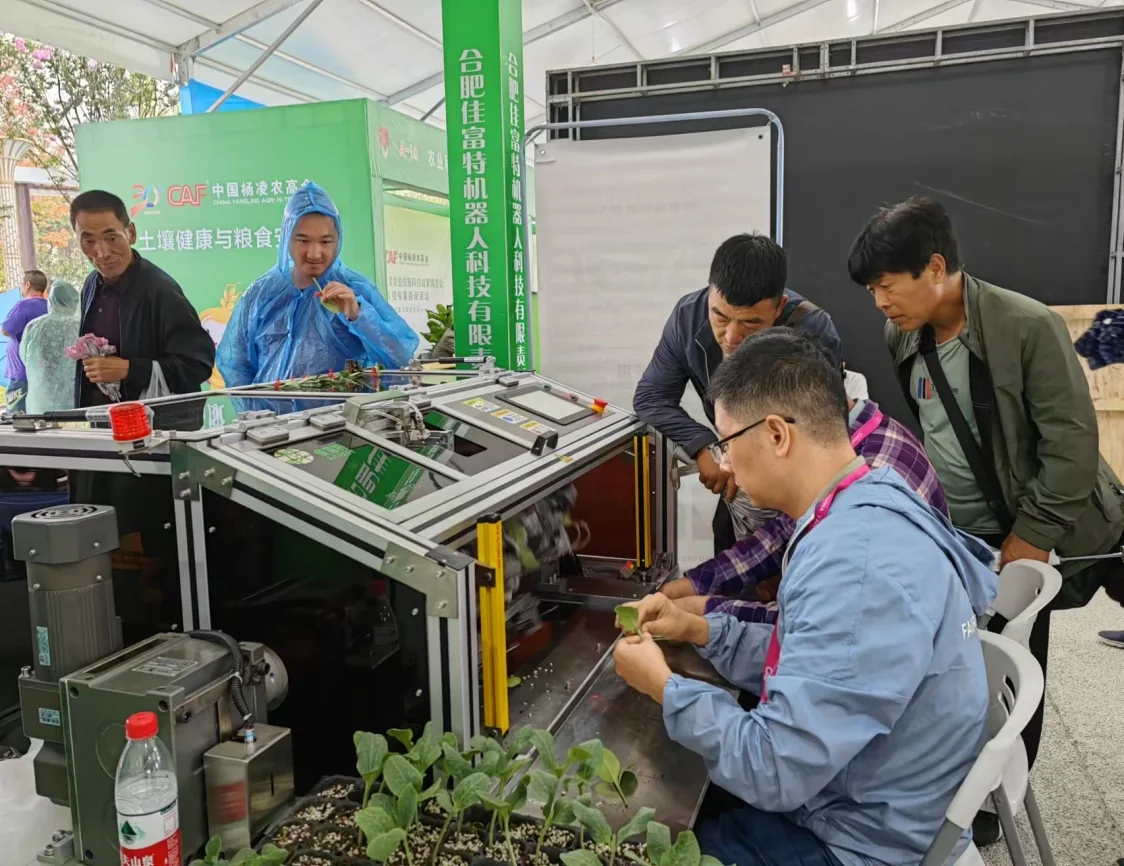
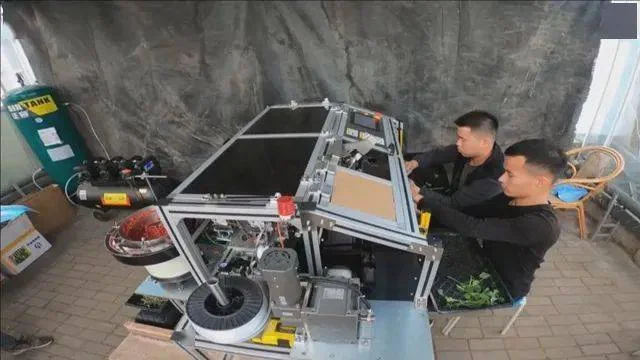
AiGRAFT's integrated seedling grafting production lines use parallel semi-automatic stations, with station quantity and layout evaluated against the nursery's requirements. Conveying, collection and auxiliary modules can be considered around the workstation arrangement.
The operator-fed approach retains people loading rootstock and scion while configured mechanical stages perform grafting tasks. It can be evaluated as an expansion route where the nursery wants additional stations without moving immediately to automatic feeding across the whole process.
The seedling grafting robot range includes standalone and higher-automation configurations. Selection depends on the seedlings, trays, operating plan and intended interfaces. Neither modular construction nor a common brand name guarantees that an existing machine can be connected without changes. Confirm the model, configuration and interface scope before ordering.
Request an Expansion Proposal, Not Just a Machine Price
A useful quotation separates retained assets, new stations, interface work, utilities, installation, training and acceptance responsibilities. It should also distinguish work needed now from provisions for a later expansion.
Discuss a phased grafting expansion with AiGRAFT using existing machine details, a dimensioned layout, crop and tray information, current accepted output and peak demand. Identify equipment you want to keep, available installation windows and the current bottleneck. Those inputs make the reuse discussion specific enough to evaluate.
Frequently Asked Questions
Can we keep grafting machines from another manufacturer?
Possibly, as independent stations or through a reviewed interface. Provide model documentation and operating details. Do not assume compatibility from appearance, nominal speed or conveyor height alone.
Does a modular grafting line require fully automatic feeding?
No. A modular line can use operator-fed grafting stations. Loading, inspection, preparation and collection duties must still be specified for the proposed arrangement.
Can we reserve space now and add stations later?
Yes, that is a planning option. Confirm future access, utilities, material routes and interface requirements rather than reserving only the machine footprint. Later configurations still need review.
Can expansion be completed without stopping production?
Do not assume so. The installation sequence, separation of work areas and approved changeover plan determine the disruption. Agree contingency arrangements before modifying the operating installation.
When is replacing equipment better than retaining it?
When condition, missing documentation, incompatible interfaces or required modifications make retention unsuitable for the agreed project. Compare complete installed scope and accepted output, not only the price of the new station.