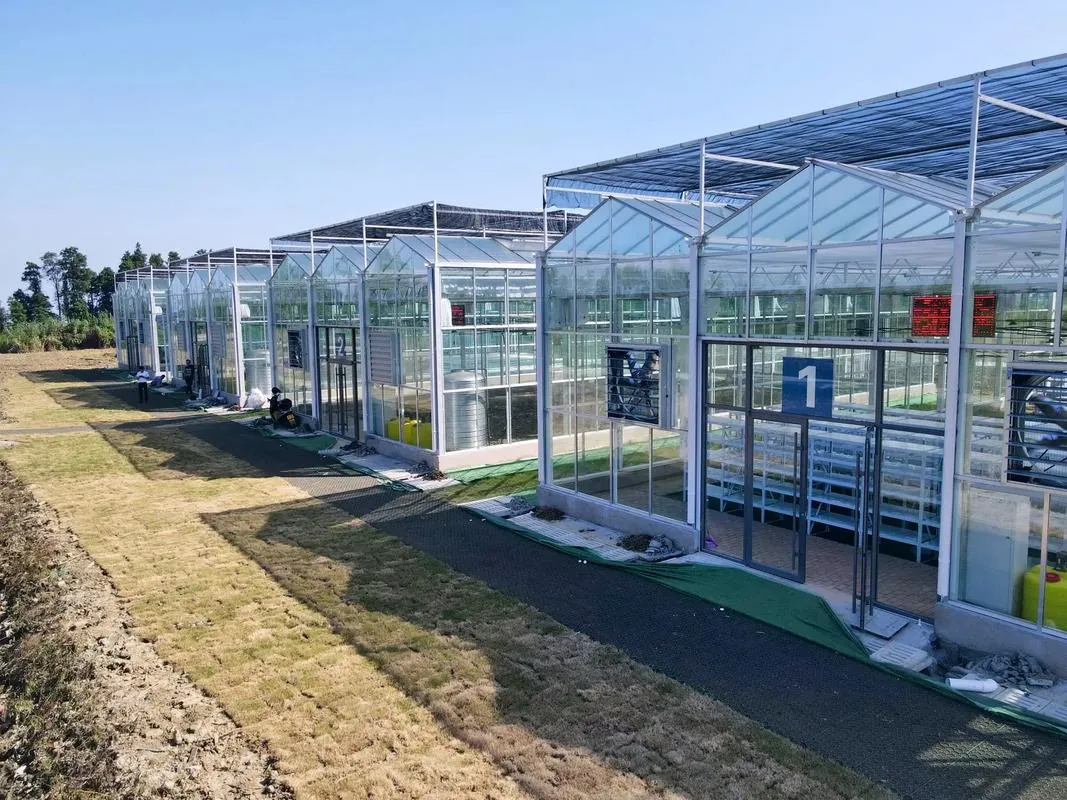
Brazil: Less Labor, Better Grafting Results
At this Brazilian nursery, the JFT-B1200TA replaced the grafting workload of five manual workers, with graft survival above 98% under suitable seedling-matching and healing conditions.
Read Full Case
Scale the Workflow, Not Just the Number of Machines
For a commercial watermelon nursery, adding grafting machines is only part of increasing output. Prepared rootstock and scion must reach each operator, and finished seedlings must leave the stations without interrupting the next grafting cycle. This case focuses on four grafting robots linked within one organized production line: parallel, operator-fed grafting stations with coordinated material supply and finished-seedling collection. It is a semi-automatic workflow, not an unattended grafting system.
Nominal machine capacity and operator planning are different measures. The figures below describe the reference configuration, not independently measured customer results.
| Planning Item | 4 Independent Stations | 4-Station Linked Line |
|---|---|---|
| Grafting stations | 4 | 4 |
| Nominal combined machine capacity | 4,800 seedlings/hour | 4,800 seedlings/hour |
| Rootstock and scion loading | 8 operators | 8 operators |
| Collection and tray stacking | 4 operators: one per station | 1 shared operator |
| Loading + collection subtotal | 12 operators | 9 operators |
Staffing basis: the supplied operating plan of two loading operators and one collection operator per standalone machine, versus eight loading operators and one shared collection operator for four linked machines. The subtotal excludes preparation, logistics, breaks, quality control and healing. It is not a whole-nursery labor-saving measurement.
Additional demonstration from the integrated production line product page. This product-reference footage is separate from the original watermelon case video above.
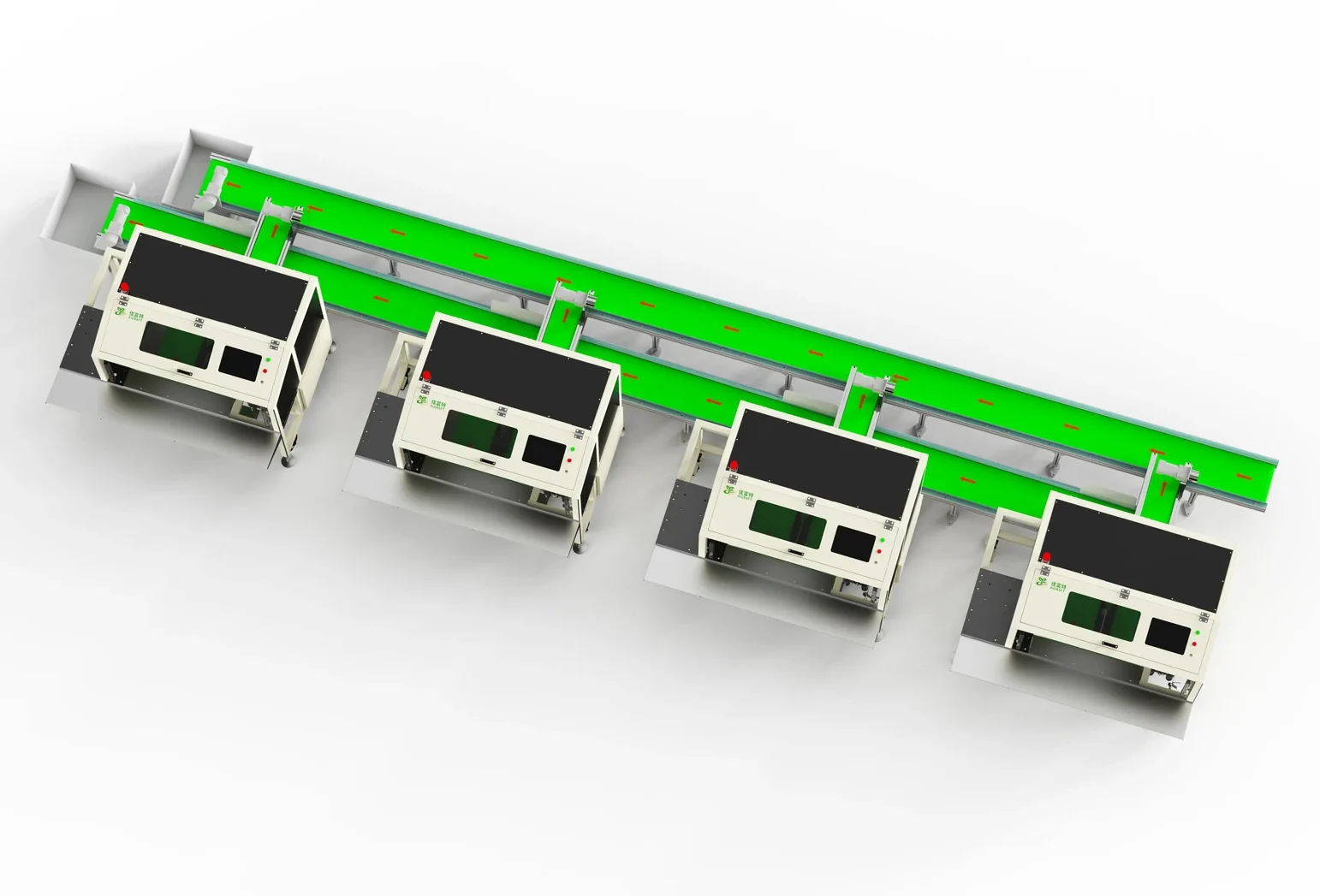
The objective is to keep four grafting stations supplied and collect finished seedlings through a shared workflow, rather than duplicate every handling task at each machine.
At each semi-automatic grafting station, one operator loads rootstock and another loads scion. Four stations therefore require eight loading operators. The machines perform the configured cutting, alignment, joining and fixing operations in parallel; a seedling is not passed through all four machines in sequence.
The linked arrangement uses one shared operator for finished-seedling collection and tray stacking, according to the staffing configuration provided for this project. This reduces duplication at collection compared with four independently staffed machines. It does not remove the work of seedling preparation, material supply, quality checks or healing.
AiGRAFT lists a nominal rating of 1,200 seedlings per hour for each JFT-B1200TA station. Four stations therefore give a nominal combined capacity of 4,800 seedlings per hour. This is a configuration calculation, not a measured output claim for a full nursery shift. Actual production depends on the crop, seedling condition, loading rhythm, interruptions and line configuration.
See the integrated seedling grafting production line specifications for station options, capacity planning and project configuration requirements.