Gapping, Grading or Transplanting: Which Machine Solves Your Plug Tray Quality Problem?
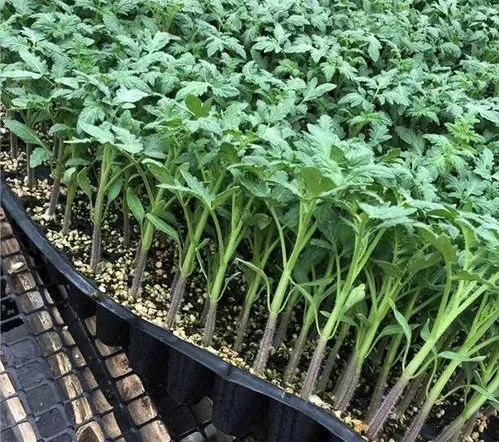
An empty cell, a weak seedling and an overcrowded propagation tray may all look like “transplanting problems.” They are not the same automation task. A seedling gapping machine corrects incomplete trays, an automatic seedling grading machine separates plants into defined groups, and an automatic seedling transplanter moves plugs into a new tray, container or spacing pattern.
The practical selection rule is simple:
- Choose gapping when the required output is a tray filled with acceptable replacement plugs.
- Choose grading when the required output is two or more clearly defined seedling classes.
- Choose transplanting when the required output is a different tray, container or plant spacing.
Some nurseries need two of these functions in sequence. Many need only one. Defining the required output before discussing speed, cameras or gripper count prevents the wrong machine from being quoted.
One Plug-Tray Problem Can Point to Three Different Machines
Commercial nursery teams often use “transplanter” as a general term for equipment that picks up and relocates plugs. Mechanically, that description may be correct. Operationally, it is incomplete.
A plug tray gapping machine may pick up a seedling, but its production objective is tray correction. A grading machine may also move seedlings, but its objective is classification. A transplanter changes the seedling’s destination or growing density. Industry equipment portfolios separate these functions for the same reason: the process logic, input material and acceptable output differ.
Before comparing nursery automation equipment, ask one question:
What must be different about the tray or seedlings when the machine finishes its cycle?
That answer is more useful than the machine name.
Quick Comparison: Gapping vs. Grading vs. Transplanting
| Decision Point | Gapping or Replenishment | Grading | Transplanting |
|---|---|---|---|
| Primary problem | Empty cells, missing plants or unacceptable plugs | Mixed seedling size or quality | Plants need a new tray, container or spacing pattern |
| Main input | Recipient trays plus qualified donor plugs | A mixed population of seedlings | Source trays plus destination trays or containers |
| Core action | Inspect, remove when required and replace | Measure selected traits and route plants by class | Extract, transfer and place plugs |
| Required output | Corrected recipient trays | Separate, defined groups | Correctly populated destination format |
| Key production rule | What counts as acceptable or reject? | What defines each grade? | Where must each plug be placed? |
| Donor tray required? | Usually yes | Not necessarily | No, unless combined with replenishment |
| Typical buying term | Seedling gapping machine; seedling selection and replenishment machine | Automatic seedling grading machine | Automatic seedling transplanter; plug tray transplanting machine |
| Does not automatically solve | Systematic germination or seeding problems | Empty positions unless replenishment is included | Quality variation unless inspection or grading is included |
Choose Gapping When the Output Must Be a Corrected Tray
What a Gapping System Actually Does
Gapping is a correction process. The system inspects a recipient tray, identifies positions that do not meet the nursery’s rules and replenishes those positions with qualified plugs from donor material. Depending on the project, an unacceptable position may be empty, contain a weak seedling or contain a plug that falls outside a defined visual standard.
This makes gapping useful when downstream production expects trays with a high proportion of usable plants. Examples include trays moving to a shipment area, a grafting line, a transplanting process or a growing stage where employees would otherwise perform manual tray correction.
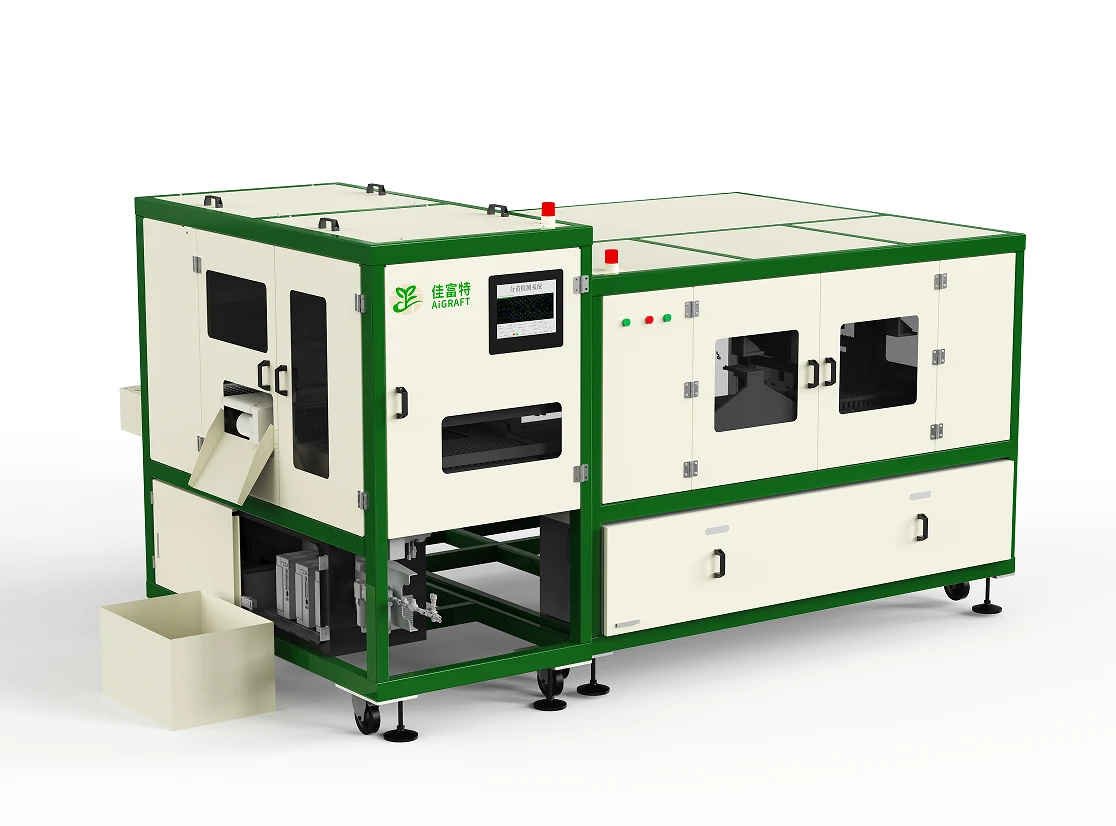
AiGRAFT’s Seedling Selection and Replenishment Machine is the relevant product category for this task.
Information the Machine Needs
A vision-guided gapping project needs an operational definition of a good plug. “Replace weak seedlings” is not precise enough for commissioning. The nursery should specify which visible conditions lead to acceptance, rejection or manual review.
- crop and variety;
- seedling age or growth stage;
- expected leaf development and canopy size;
- whether empty cells and weak plants are treated differently;
- donor-tray format and donor availability;
- source-tray dimensions, cell count and cell geometry;
- acceptable root-plug condition;
- the required number of corrected trays per hour or shift.
The donor supply deserves particular attention. A gapping machine cannot create qualified seedlings. If donor plugs are inconsistent, overgrown or difficult to extract, replenishment output will be limited by the incoming material.
What Gapping Does Not Solve
Gapping corrects selected positions; it does not remove the root cause of repeated tray defects. If empty cells follow the seeder’s nozzle pattern, if germination is poor across an entire seed lot, or if irrigation creates recurring weak zones, the nursery should address those upstream conditions as well.
It also does not automatically create size grades. Replacing a clearly weak plant is different from dividing an acceptable crop into small, medium and large groups.
Choose Grading When the Output Must Be Defined Quality Groups
A Grade Must Lead to a Production Decision
Seedling grading is appropriate when acceptable plants still differ enough to require different treatment. The output may be separate groups for grafting, transplanting, crop scheduling, growing-on or sale.
The important distinction is that grading produces classes, not simply “good” and “bad” decisions. A nursery may want three groups based on measurable plant characteristics, while another may need only an acceptable stream and a reject stream. The grade system should reflect a downstream action. If every grade returns to the same bench under the same schedule, classification may add cost without improving the workflow.
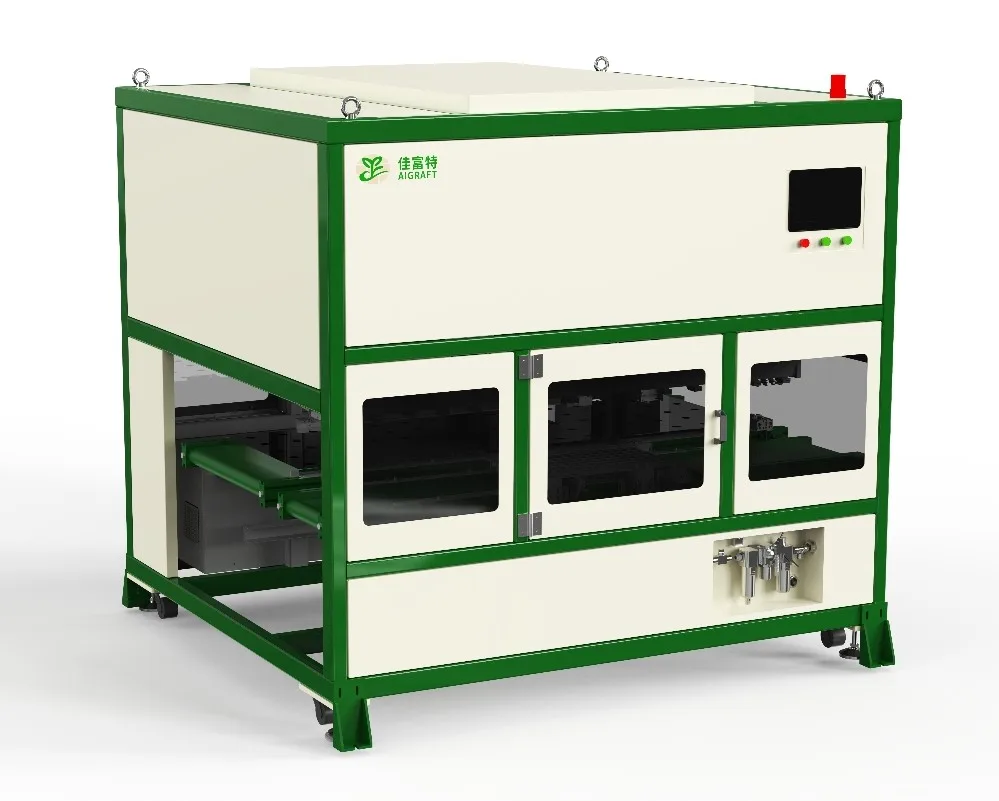
AiGRAFT’s Automatic Seedling Grading Machine is designed for this classification task. Its current product page describes evaluation based on observable seedling features, including stem and leaf information. Exact thresholds must be established for the crop and production stage.
Define Measurable Traits Before Quotation
Terms such as “strong,” “uniform” and “marketable” are useful in conversation but insufficient as control rules. The project team should translate them into observable features and tolerances. Depending on the crop and growth stage, those features may include stem diameter, plant height, leaf count, leaf color, canopy area or another agreed indicator.
The nursery should also decide what happens to each class. For example:
- top-grade plants continue to the main production route;
- smaller but acceptable plants receive additional growing time;
- rejects leave the automated flow;
- uncertain plants go to a manual review position.
These routing decisions determine the number of output positions, conveyor arrangement and labor around the machine.
What Grading Does Not Solve
A grading machine does not automatically change growing density unless it is integrated with a transplanting function. It also does not replenish empty cells unless the equipment and workflow include donor selection and replacement.
Choose Transplanting When Plants Must Move to a New Format
High-Density to Low-Density Transplanting
Automatic transplanting is the correct category when plugs must leave a source tray and enter a destination tray, pot, growing board or other compatible format. In plug nurseries, a common application is high-density to low-density transplanting, which gives developing plants more growing space after the propagation stage.
The AiGRAFT Automatic Transplanting Machine represents this equipment category. Selection should be based on the actual source tray, destination format, crop and plug condition rather than on the word “transplanting” alone.
Source and Destination Tray Compatibility
A transplanting project has two mechanical interfaces, not one. The source must release the plug consistently, and the destination must accept it at the required location and depth. The evaluation should cover:
- outside tray dimensions and orientation;
- number of cells, row pattern and cell pitch;
- cell opening, depth and taper;
- tray rigidity and manufacturing variation;
- drainage-hole geometry;
- destination spacing and planting pattern;
- whether empty destination positions are permitted;
- required placement depth and plug orientation.
What Transplanting Does Not Solve
A standard transplanter follows a placement pattern. It should not be assumed to remove weak plants, select donor material or create quality grades unless those functions are explicitly included. If poor seedlings enter the process, they may simply be moved into the destination tray.
Diagnose the Symptom Before Selecting the Machine
| Production Symptom | Likely Function | Question to Confirm the Choice |
|---|---|---|
| Random empty cells after germination | Gapping | Do you have qualified donor plugs to fill the missing positions? |
| Weak plants must be removed and replaced | Gapping with defined acceptance rules | Can weak plants be identified reliably at the selected stage? |
| Plants are healthy but uneven in size | Grading | Will each grade follow a different production route? |
| Plants must move from a dense propagation tray to a wider pattern | Transplanting | Are both source and destination formats mechanically compatible? |
| Only selected grades should enter destination trays | Grading plus transplanting | Should the grade determine the destination position or route? |
| Trays contain both missing plants and mixed sizes | Investigate a staged workflow | Is the priority tray completion, class separation or both? |
| Defects repeat in the same tray pattern | Upstream process correction first | Is the primary cause seeding, germination, irrigation or tray handling? |
This table is a starting point, not a substitute for a sample test. The same visible symptom can have different causes, and the same crop may behave differently at another growth stage.
Can One Nursery Workflow Need More Than One Function?
Yes. Commercial equipment can combine or sequence inspection, selection and transplanting, but the workflow should be justified by a defined production requirement.
Gapping Before Transplanting
Correcting source trays before transplanting may make sense when the downstream machine expects a stable supply of acceptable plugs. However, filling a source tray only to remove every plant immediately afterward adds handling. An alternative may be to use donor selection directly within the transplanting workflow. The right layout depends on tray routing and buffer requirements.
Grading Before Destination Placement
Grading and transplanting can be connected when each class has a destination. Larger plants might follow one route, smaller acceptable plants another, and rejects a third. This requires clear grade definitions and sufficient downstream capacity for every route.
When a Combined System Is Unnecessary
Do not add machine functions simply because they are available. If the nursery only needs high-density to low-density transfer and incoming plugs are already consistent, a well-matched transplanter may be enough. If the problem is only random empty cells, a dedicated plug tray replenishment process may be easier to operate than a multi-function line.
Compare Real Output, Not Only Rated Capacity
Catalog capacity is useful for initial screening, but it is not the same as acceptable production output. Compare systems using a defined test condition and the metric that matters to the nursery: accepted seedlings, completed trays or finished destination units per hour or shift.
Actual output can be affected by:
- percentage and distribution of rejects;
- donor-plug availability;
- consistency of tray presentation;
- plug extraction success;
- crop changeover and tooling change time;
- operator loading and unloading;
- buffer capacity before and after the machine;
- cleaning, adjustment and routine maintenance;
- downstream equipment speed.
Ask suppliers to state what is included in the quoted capacity and what conditions were used. A fast pick-and-place cycle does not provide useful output if the machine waits for trays, rejects too many plugs or creates a bottleneck at unloading.
Tray Geometry and Root-Plug Condition Can Decide the Project
Even a correctly selected function can fail if the plug cannot be handled reliably. UMass Extension identifies substrate moisture and compaction, plug and cell size, roots extending through drainage holes and tray-hole patterns as factors in plug extraction. Excessive resistance can damage stems or roots.
For that reason, send physical tray samples and seedlings when possible. A useful test should include normal production variation, not only the most uniform tray from the crop. Record whether plugs remain intact, release cleanly and arrive at the destination at the correct depth and orientation.
The tray name or nominal cell count is not enough. Suppliers need a dimensioned drawing or measured sample because trays with the same number of cells may differ in pitch, taper, drainage holes and rigidity.
Information to Send Before Requesting a Quotation
- Crop, variety and seedling stage.
- Photos and video of typical trays, including normal defects.
- Source-tray outside dimensions, cell count, pitch, depth and drainage-hole design.
- Destination-tray or growing-container specifications, if transplanting is required.
- Current substrate and the moisture condition during handling.
- Photos of extracted root plugs from several representative trays.
- Definition of an acceptable, weak and reject seedling.
- Measurable grade rules and the destination of each class, if grading is required.
- Donor-tray format and available donor quantity, if gapping is required.
- Required acceptable output per hour, shift and season.
- Current operators, tray flow, conveyors and available floor space.
- Electrical and compressed-air conditions at the installation site.
Review the broader AiGRAFT nursery automation product range, then contact AiGRAFT with this information for a technical evaluation. The goal of the first discussion should be to define the process and test conditions, not merely to select the highest catalog speed.
Frequently Asked Questions
Is Seedling Gapping the Same as Transplanting?
No. Gapping corrects selected positions in a recipient tray using acceptable donor plugs. Transplanting moves plugs into a new destination format or spacing pattern. Both operations may involve plug pickup and placement, but their production outputs are different.
Can a Grading Machine Also Transplant Seedlings?
Some equipment combines classification and destination placement, while other machines perform grading only. Confirm whether the proposed system can route each grade into the required tray or container and whether that configuration has been tested with your crop and trays.
Should a Nursery Gap Trays Before or After Grading?
There is no universal sequence. If the next process needs complete trays, gapping may come first. If only certain grades should be replenished or transplanted, classification may need to occur earlier. Map the destination of acceptable, undersized and rejected plants before defining the sequence.
What Makes a Plug Suitable for Automatic Handling?
A suitable plug releases from the source cell, remains sufficiently intact during handling and can be placed without unacceptable stem or root damage. Moisture, substrate compaction, root development, tray geometry and crop stage all matter. A representative sample test is the safest way to confirm compatibility.
What Should Be Included in a Machine Trial?
Use representative crops, source and destination trays, realistic defect rates and normal operators. Measure acceptable completed output, extraction and placement failures, damage, changeover time and manual intervention. Agree on acceptance criteria before the trial starts.
Define the Output Before Choosing the Machine
The most useful question is not “Which nursery robot is more advanced?” It is “What must this machine deliver to the next production step?”
If the answer is a corrected tray, evaluate gapping. If it is defined seedling classes, evaluate grading. If it is a new growing position or lower-density format, evaluate transplanting. When two answers apply, design the sequence around actual material flow and measurable acceptance rules. That approach leads to a clearer quotation, a more meaningful trial and a nursery automation project built around the real plug-tray problem.