How to Reduce Empty Cells and Weak Seedlings in Plug Tray Nurseries
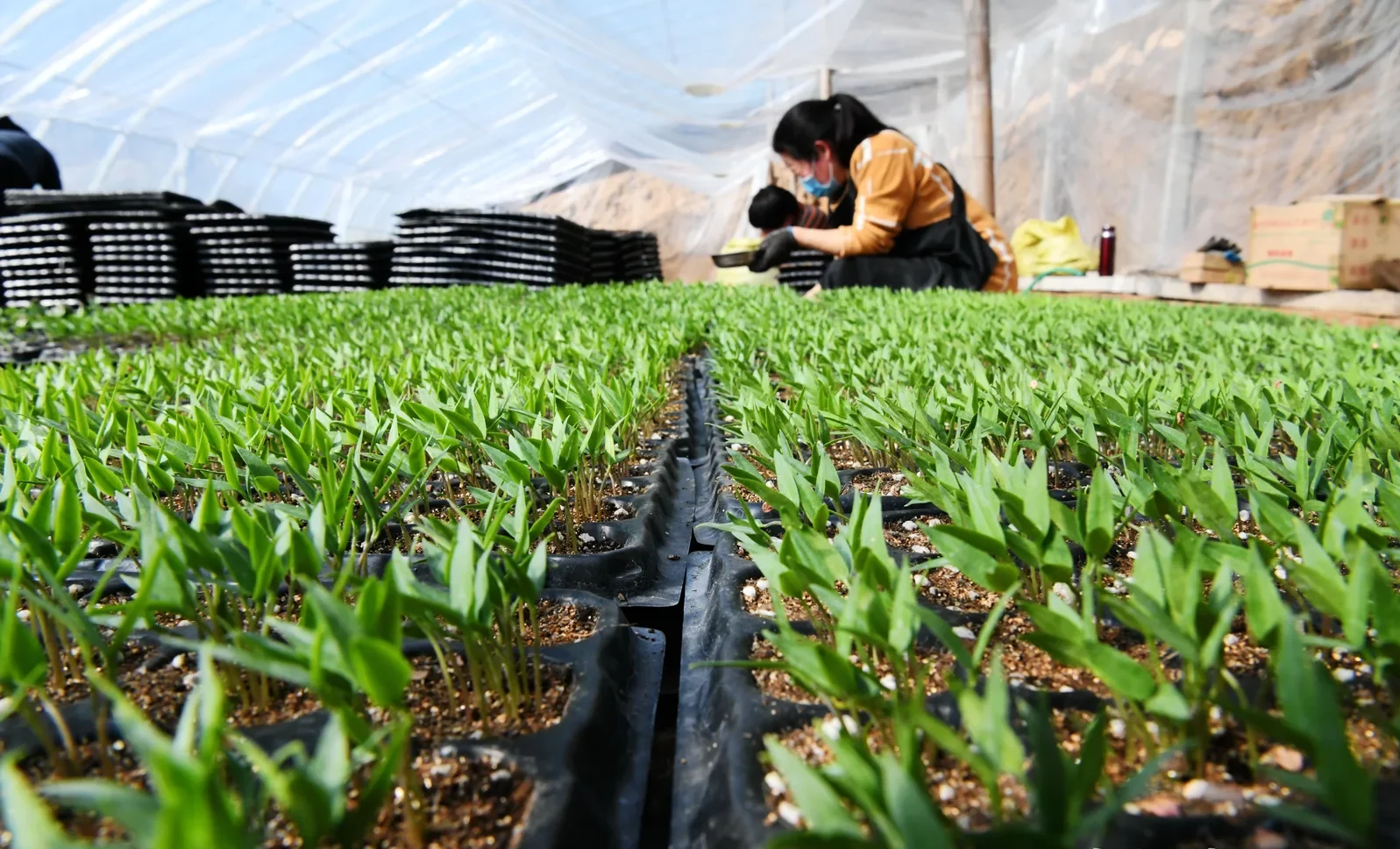
An empty cell is not just a missing plant. By the time a tray reaches transplanting, that cell has already used substrate, bench space, irrigation and handling time. A weak seedling creates a different problem: it occupies the cell, but it may not be suitable for grafting, transplanting or sale.
The practical response is not to start with a machine. First find out where the defect entered the process. Then define what your nursery considers an acceptable seedling, choose the right inspection point and decide how the tray should be corrected.
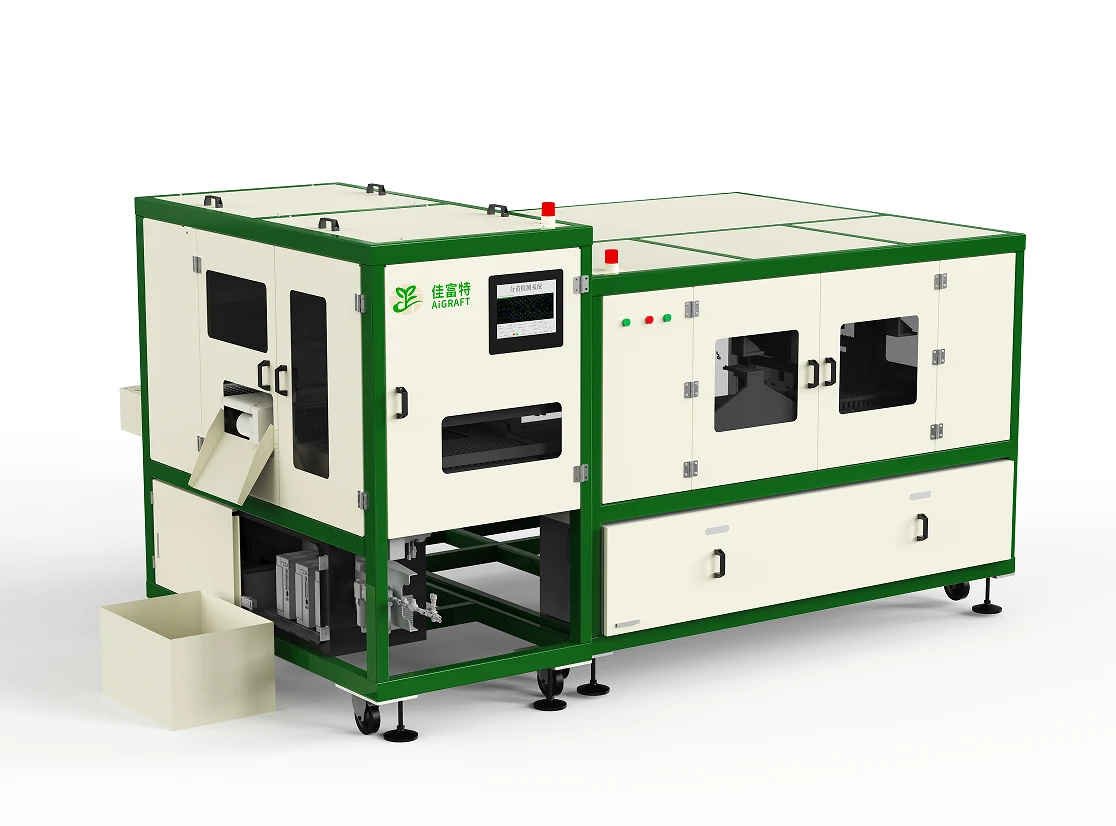
For nurseries processing a large number of plug trays, this correction step may eventually become a job for a seedling selection and replenishment machine. The equipment decision still comes after the production diagnosis.
Start by Finding Where the Empty Cell Was Created
A tray can arrive at the correction station with the same visible symptom—an empty cell—but several different causes. If those causes are mixed together, the nursery may spend every week fixing trays without reducing the number of defects.
| What you see | Likely process stage | What to check first | Practical response |
|---|---|---|---|
| No seed or no emergence in isolated cells | Seeding | Seed pickup, nozzle or suction setting, seed size, tray indexing | Check seeder setup and inspect the first trays after a crop change |
| Empty cells appearing in a repeated row or pattern | Seeding or tray positioning | Alignment, blocked pickup points, tray pitch and indexing | Stop and check the pattern before running the full batch |
| Seed was placed but emergence is uneven | Germination | Seed lot, sowing depth, moisture, temperature and substrate consistency | Separate germination diagnosis from machine adjustment |
| Seedling emerged but later declined | Growing stage | Irrigation distribution, nutrition, light, disease and root development | Correct the growing condition and set a removal rule for affected plants |
| Plug is present but lost during handling | Tray movement or extraction | Root-ball integrity, moisture, tray rigidity and plug release | Review handling and extraction before increasing speed |
The distinction matters. A replenishment station can correct the tray, but it cannot repair a poor seed lot, an irrigation problem or an incorrect seeder setting. Those issues need to be addressed upstream.
Research on plug-tray seeding has examined machine-vision methods for detecting missed seed positions and directing supplementary seeding. That work confirms the value of early detection: a missing seed is easier to correct before the tray has occupied greenhouse space and received further inputs. See the research summary on missed-seeding detection and empty-cell replenishment.
If the pattern points back to sowing, review the crop, tray and seed setup used by the automatic precision seeder. Different seed shapes and sizes may require different pickup components or operating settings.
Define a Weak Seedling Before You Try to Remove One
“Weak” is too vague for a production rule. One operator may reject a short plant, while another keeps it because the stem is sound. A camera system cannot resolve that disagreement unless the nursery first defines the decision.
The useful criteria depend on the crop and on what happens next. A seedling prepared for grafting may be judged by stem diameter, stem position and growth stage. A seedling prepared for tray-to-tray transplanting may also need a stable root plug, suitable height and enough leaf development to tolerate handling.
A working acceptance sheet might include:
- minimum and maximum seedling height;
- acceptable stem-diameter range;
- leaf number or visible leaf condition;
- stem damage, bending or abnormal growth;
- root-plug development and plug integrity;
- disease symptoms or mechanical injury;
- the next operation: grafting, transplanting, continued growing or sale.
Do not create one rule for every crop. Tomato, pepper, watermelon, melon, cucumber and ornamental seedlings do not reach the same handling condition at the same age. Even within one crop, the acceptable range may change with tray size and the next production stage.
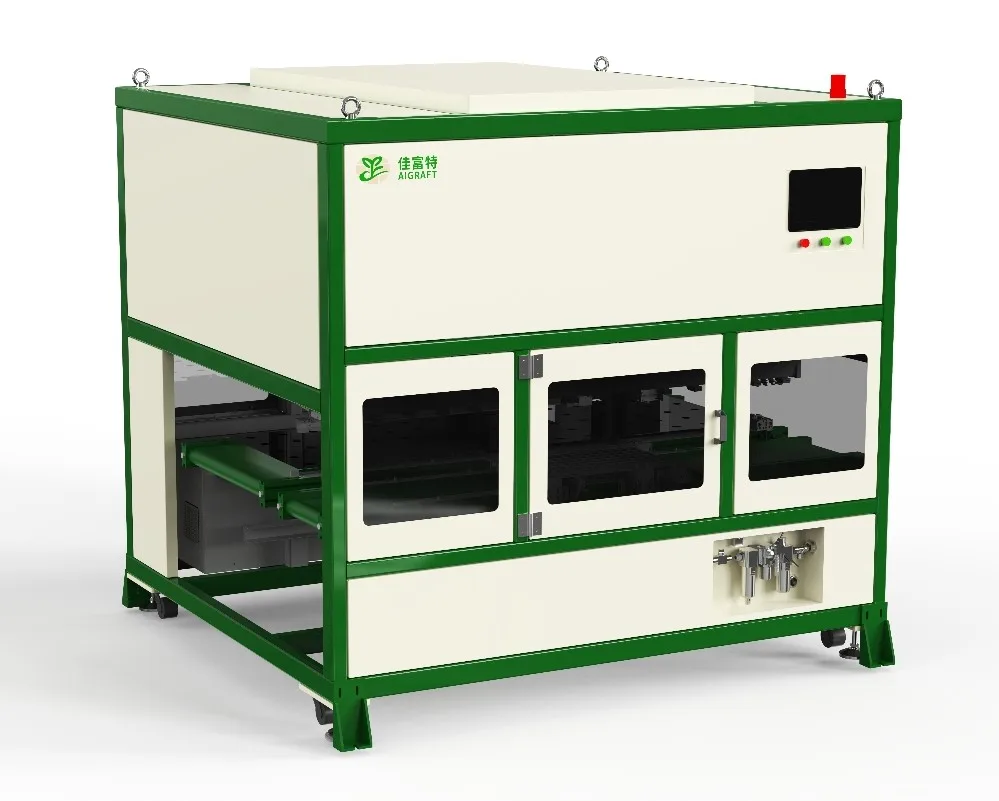
If the job is to divide a mixed batch into defined quality groups rather than simply remove unacceptable plants, the nursery is dealing with grading. AiGRAFT’s automatic seedling grading machine evaluates seedling information such as stem diameter, height and leaf characteristics according to the configured application.
Choose the Right Inspection Point
Inspection should take place where the nursery can still act on the result. One check at the end of the process is often too late.
After seeding
This is a useful point to identify missed seed placement or obvious doubles before germination. Correcting the tray here prevents an avoidable empty cell from moving through the greenhouse.
After emergence
At this stage, the nursery can distinguish an empty cell from a delayed or failed emergence. It is also early enough to compare patterns between seed lots, tray positions or greenhouse zones.
Before grafting
Rootstock and scion batches need to meet the grafting specification at the same time. Removing unsuitable seedlings before they reach the grafting workstation avoids feeding material that cannot be processed consistently.
Before automatic transplanting
This is the last practical checkpoint for correcting missing and weak plants before tray-to-tray transfer. It also protects the transplanting station from spending cycles on empty cells or unsuitable plugs.
An academic review of plug-tray transplanting technologies separates several tasks that are sometimes all called “transplanting”: high-density to low-density transfer, replacement of missing or weak seedlings, and graded transplanting. The distinction is useful because each task needs a different inspection and handling sequence. The review is available in Agriculture.
Manual Correction or Vision-Guided Replenishment?
Manual checking remains practical for small batches, frequent experiments or nurseries with many crops and little standardisation. It becomes harder to manage when the same inspection must be repeated across large tray volumes within a narrow production window.
| Decision factor | Manual tray correction | Vision-guided selection and replenishment |
|---|---|---|
| Suitable use | Small or irregular batches | Repeated, higher-volume tray programs |
| Decision method | Operator judgement | Defined visual and production criteria |
| Crop change | Flexible, but depends on worker knowledge | Requires configuration and validation for the new crop |
| Traceability | Usually limited unless recorded separately | Can support a more structured inspection workflow |
| Main constraint | Fatigue, staffing and judgement variation | Input consistency, setup quality and equipment fit |
| Replacement work | Worker removes and refills cells | Machine identifies targets and performs configured removal and placement steps |
| What it cannot fix | Upstream seeding or growing problems | Upstream seeding or growing problems |
The point is not that automation always wins. It is that the correction method should match the volume, repeatability and decision rules of the nursery. If the crop mix changes every few trays and the reject rule is still subjective, the process is not ready for reliable automation. If the same tray and crop program is repeated daily, a vision-guided system becomes easier to justify and operate.
What a Vision-Guided Replenishment Workflow Actually Does
A typical selection and replenishment workflow has six parts:
| Step | Machine task | Nursery decision behind it |
|---|---|---|
| 1. Inspect | Capture tray and seedling information | Where should the tray be viewed, and under what conditions? |
| 2. Classify | Mark acceptable, weak and empty positions | What exactly counts as acceptable or reject? |
| 3. Remove | Extract the target weak seedling or clear the target position | Can the plug be removed cleanly from this tray and substrate? |
| 4. Select replacement | Choose a suitable plant from a source tray | Does the source tray contain seedlings within the required range? |
| 5. Replenish | Place the selected plug into the target cell | Are cell geometry, plug size and placement depth compatible? |
| 6. Verify | Confirm the corrected position and release the tray | What result should trigger recheck or operator intervention? |
AiGRAFT’s current JFT-F1000XA product page describes this type of workflow using imaging, visual recognition, target extraction and replenishment. The configuration is reviewed against seedling type, tray specification and production requirements. That qualification is important: a camera and gripper cannot be treated as crop-independent accessories.
Do Not Confuse Replenishment, Grading and Transplanting
These functions can sit next to each other in a nursery line, but they are not interchangeable.
| Nursery problem | Function to evaluate | Output |
|---|---|---|
| Empty cells or visibly unsuitable seedlings in a tray | Selection and replenishment | A corrected tray with target positions refilled |
| Plants in the same batch vary in size or development | Seedling grading | Separate groups based on defined traits |
| Seedlings must move from a dense propagation tray to a wider growing format | Automatic transplanting | Seedlings placed into a destination tray or compatible container |
| Several stages create queues and repeated tray handling | Connected nursery automation | A planned handoff between inspection, correction, grading and transfer |
If the main problem is spacing, start with the automatic transplanting machine. If the main problem is mixed quality, evaluate grading. If the trays already contain clear gaps or reject plants, correct those positions before they become input for the next machine.
The broader AiGRAFT nursery automation equipment overview shows where seeding, selection, grading and transplanting sit in the production flow.
Prevent the Same Defects from Returning
Tray correction should produce information, not just better-looking trays. Record where the rejected cells occur and look for patterns:
- the same row or column across many trays;
- one seed lot producing more misses;
- one greenhouse zone producing slower seedlings;
- defects rising after a tray, nozzle or crop change;
- plugs failing during extraction at a particular moisture level;
- one shift applying a different reject standard.
These observations tell the production manager where to work next. Repeated row patterns point toward setup or indexing. Random non-emergence may require a seed or germination review. Weak plants clustered in one growing zone suggest that the correction station is seeing the result of an earlier environmental problem.
Without that feedback, replenishment becomes permanent rework. With it, the nursery can reduce the number of trays that require correction in the first place.
Information to Prepare Before Equipment Evaluation
Before asking a supplier to recommend a selection and replenishment system, prepare real production inputs:
- Crop and variety.
- Seedling age or growth stage at inspection.
- Plug tray length, width, height, cell count, cell pitch and cell depth.
- Clear photos of acceptable, weak and reject seedlings.
- Photos showing typical empty-cell patterns across complete trays.
- The written rule used to accept or reject a seedling.
- Root-plug condition and the current extraction method.
- Average and peak tray volume per shift.
- The location of the correction step in the existing workflow.
- A short video showing tray handling before and after inspection.
This information is more useful than a crop name alone. It allows the supplier to check whether the vision criteria, tray handling and replacement process can be configured around the actual nursery operation.
Frequently Asked Questions
Can an automatic replenishment machine fix poor germination?
It can correct affected tray positions, but it does not remove the cause of poor germination. Seed quality, sowing depth, moisture, temperature, substrate and other growing conditions still need to be investigated.
When should plug trays be inspected?
Use checkpoints where the result can still prevent wasted work: after seeding, after emergence and before a major operation such as grafting or automatic transplanting. The exact schedule depends on crop and production flow.
What is the difference between seedling replenishment and grading?
Replenishment replaces empty or unsuitable positions in a tray. Grading separates seedlings into groups according to defined traits such as stem diameter, height or leaf condition.
Can one machine setup handle every crop and plug tray?
That should not be assumed. Crop structure, seedling stage, plug size, tray geometry, root development and the nursery’s reject rules all affect configuration.
What should we send to AiGRAFT for a technical review?
Send the crop, seedling stage, tray specification, acceptance and rejection criteria, seedling and tray photos, target tray volume, and a video of the current inspection and replenishment process.
Review Your Tray-Correction Process with AiGRAFT
If empty cells and weak seedlings are slowing down your nursery, begin with the defect pattern and the current correction method. AiGRAFT can review those inputs in the context of precision seeding, seedling selection and replenishment, grading and automatic transplanting. Visit AiGRAFT and send representative tray photos and workflow details for a technical discussion.