How to Choose an Automatic Seedling Transplanting Machine for Plug Tray Nurseries
An automatic seedling transplanting machine can help commercial nurseries move plug seedlings between production stages with a more organised workflow. However, the correct equipment is not selected by capacity alone. A plug-tray nursery must first define what it needs the system to do: move seedlings from high-density trays to lower-density trays, replace empty cells and weak seedlings, sort plants by quality before transplanting, or connect several of these operations.
For this reason, a plug tray transplanting machine should be evaluated against the real seedlings and the real trays in use. Crop type, seedling stage, root-plug integrity, tray dimensions, cell count, destination tray format, plant spacing and target throughput all affect the suitable workflow. This guide explains how to assess those factors before requesting an automatic seedling transplanting solution.
Define the Nursery Task Before Comparing Machines
The word “transplanting” can describe several different nursery operations. Treating them as one task is a common reason equipment evaluations fail to reach a useful conclusion.
High-Density to Low-Density Transplanting
This workflow moves seedlings from a dense propagation tray into a destination tray with more space per plant. The purpose may be to give seedlings more root-zone volume, improve spacing for later growth, or create a finished tray format for sale or further cultivation. The machine must match both the source and destination tray geometry while handling the plug without damaging the stem or disturbing the root ball.
Empty-Cell and Weak-Seedling Replenishment
This is not simply spacing transfer. The system first identifies missing, empty or unsuitable cells and then places selected healthy seedlings into the target locations. A current review of plug-tray transplanters notes that seed quality, seeding accuracy, growing conditions, nutrition, pests and disease can all contribute to empty cells or unsuitable seedlings. The review therefore treats detection, removal and replenishment as a distinct nursery operation.
Grading Before Downstream Transplanting
Some nurseries need to separate mixed seedling batches before transfer. This is relevant when plants from the same sowing batch differ in size or growth condition. Grading can group seedlings according to defined traits, then send more consistent groups to transplanting, cultivation or order preparation.
The first decision is therefore practical: identify the exact task that currently consumes the most labor or produces the most inconsistency. Then select a system around that task rather than buying a machine based only on a general product name.
Five Selection Factors That Determine Machine Fit
1. Crop and Seedling Stage
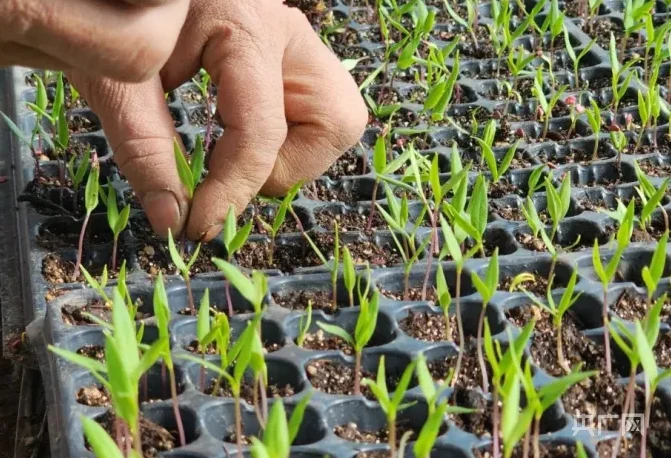
Different vegetables have different stem strength, leaf shape, root-plug development and handling sensitivity. A tomato plug, pepper plug, cucumber plug or flower seedling may need a different gripper configuration and handling rhythm. The most useful information is not only the crop name, but also seedling photos, growth stage, stem condition and whether the root plug remains intact during extraction.
2. Plug Tray and Destination Tray Format
Tray compatibility is fundamental. Confirm the source tray length and width, cell count, cell spacing, cell shape, cell depth, material and rigidity. Also provide the corresponding details for the destination tray, growing board or cultivation trough.
This matters because tray characteristics affect seedling growth and uniformity. Ontario guidance on vegetable transplants explains that cell volume, material and other tray characteristics can affect development. A machine must therefore be evaluated using the actual trays, not a nominal statement such as “128-cell tray” alone.
3. Root-Plug Integrity and Handling Method
The root plug must hold together well enough for transfer. A plug that is too dry, too wet, poorly rooted or too small can change extraction behavior. Stem pulling is not an acceptable substitute for controlled plug handling, because young stems and roots can be damaged.
Before transplanting, check whether the plug releases cleanly, whether the root ball remains stable, and whether moisture management supports extraction. UMass vegetable-transplant guidance recommends thorough watering before transplanting to help remove plugs from trays. The correct approach still depends on crop, substrate and the nursery’s current handling process.
4. Empty Cells, Weak Seedlings and Grading Requirements
If the primary issue is empty cells or weak seedlings, a spacing-only transplanting machine may not address it. The nursery may first need vision-based inspection, target removal and replenishment.
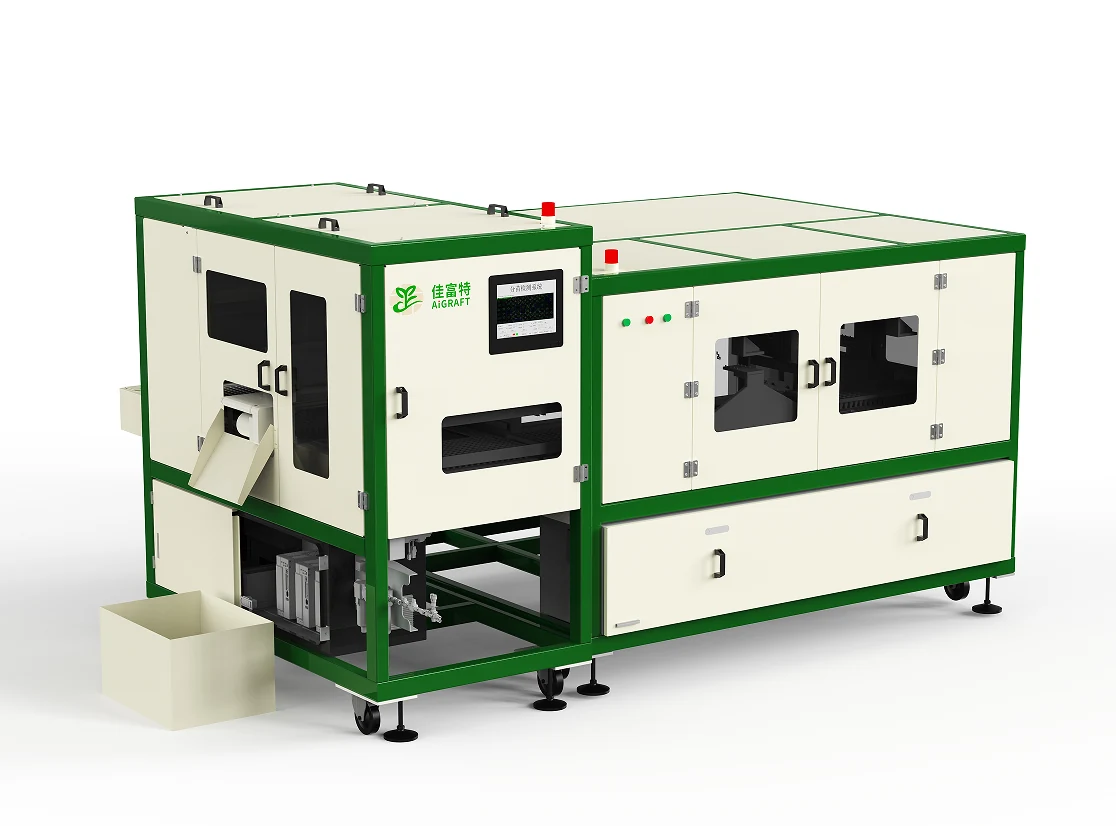
AiGRAFT’s seedling selection and replenishment machine is designed for plug-tray operations where empty cells, missing seedlings and weak seedlings need to be identified and replenished. Its current product page states that configuration is discussed according to seedling type, tray specification and production requirements.
If the main issue is uneven plant size, a grading step may be more useful before transplanting. AiGRAFT’s automatic seedling grading machine evaluates plug seedlings using stem diameter, stem height and leaf information, then classifies them into defined groups before downstream handling. The objective is not to claim that every plant will become identical; it is to make batch decisions more consistent and traceable.
5. Required Throughput and Downstream Flow
An hourly machine rating is only one part of a commercial-nursery decision. Consider how many trays are ready to feed the machine, how quickly operators can load source and destination trays, where completed trays will go, and whether irrigation, cultivation benches, grading or packing can absorb the output.
In other words, avoid moving a bottleneck downstream. If a nursery improves transplanting speed but does not have space to stage finished trays or a process to inspect them, the work simply accumulates at the next station. A practical automation project maps material flow from tray arrival to finished-tray removal.
Which Automation Function Does Your Nursery Need?
| Main nursery problem | Suitable function to evaluate | Questions to answer first | Relevant AiGRAFT page |
|---|---|---|---|
| Dense trays need more plant spacing | High-density-to-low-density seedling transfer | Source/destination tray format, crop, plug integrity, spacing | Automatic transplanting machine |
| Empty cells, missed seeds or weak plants | Inspection, removal and replenishment | What counts as weak? Are replacement seedlings available? What are the target cells? | Selection and replenishment machine |
| Mixed seedling size before transplanting | Vision-based grading and transfer | Which growth criteria define each grade? What happens to each grade next? | Automatic seedling grading machine |
| Multiple manual stages create tray-handling delays | Connected nursery workflow | Site layout, conveyors, tray buffer, operators and downstream process | Integrated production lines |
The table is a selection framework, not a fixed equipment prescription. A nursery can require more than one function, but should begin with the constraint that creates the most operational loss or planning risk.
Why Transplanting Equipment Must Be Evaluated as a Workflow
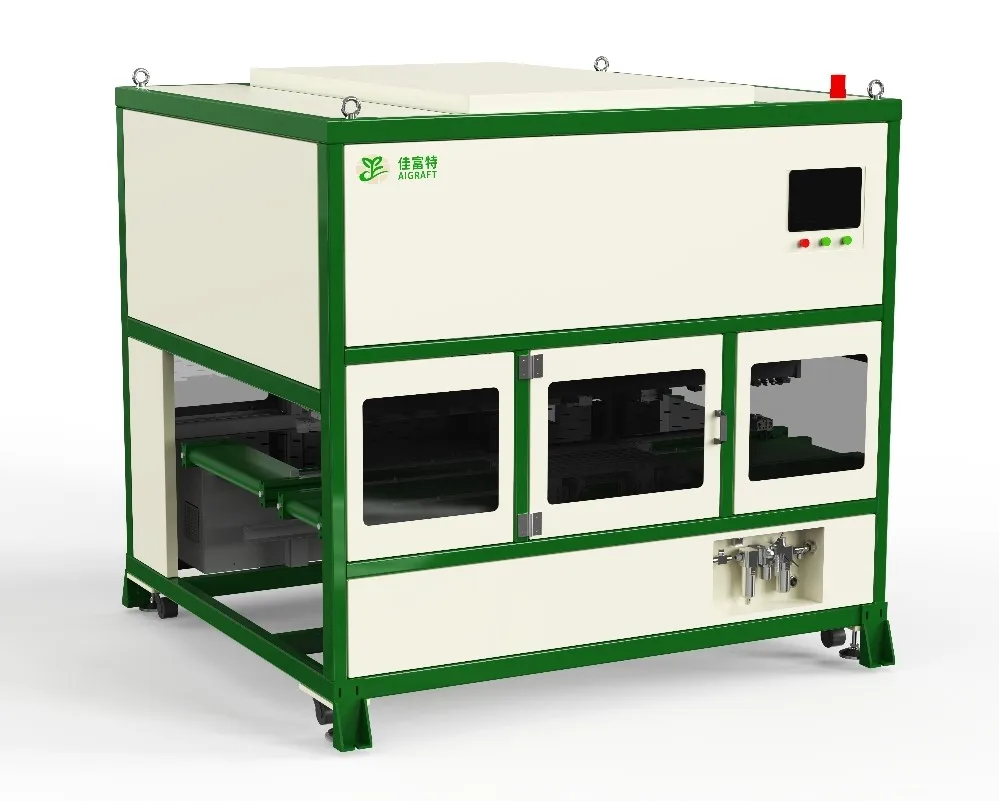
An automatic transplanting robot is most effective when upstream and downstream conditions are stable. Upstream, this includes seed quality, seeding consistency, tray format and seedling growth management. At the workstation, it includes extraction, gripping, target placement and tray positioning. Downstream, it includes finished-tray handling, irrigation, cultivation space, inspection and packing.
AiGRAFT’s product overview covers precision seeding, grafting, selection and replenishment, grading, transplanting and integrated nursery lines. That range matters because the next investment may not always be the transplanting station itself. Some nurseries need to improve tray quality before transfer; others need a more connected line after the transfer station.
For projects involving several stages, integrated nursery production lines can be evaluated around the actual layout and workflow. The purpose of an evaluation is to define the handoff points between machines and operators, not to force a standard line into a nursery with different tray formats or production priorities.
Technical Checklist Before Requesting a Quote
- Crop type and variety.
- Seedling age, growth stage and clear close-up seedling photos.
- Source plug-tray dimensions, cell count, cell spacing, cell depth and tray material.
- Destination tray, growing board or cultivation trough dimensions.
- Root-plug condition and current method of removing seedlings from trays.
- Required function: spacing transfer, empty-cell replenishment, weak-seedling removal, grading, or a combination.
- Definition of an acceptable, weak or reject seedling for the project.
- Target capacity in trays per hour and plants per hour, including peak periods.
- Available operators, space, electrical supply, compressed-air conditions and tray-flow layout.
- Photos or videos of the existing nursery process, source trays and destination trays.
These inputs allow a supplier to assess technical fit before discussing a configuration. They also reduce the risk of designing around an assumed tray or seedling condition that does not exist in the nursery.
FAQ
What is an automatic seedling transplanting machine?
It is nursery equipment designed to transfer plug seedlings between trays, containers or production stages. Depending on the configuration, it can be evaluated for spacing transfer, tray handling or connected automation workflows.
What is the difference between a transplanting machine and a replenishment machine?
A transplanting machine is evaluated for moving seedlings into new positions or destination trays. A replenishment machine focuses on identifying and correcting empty, missing or weak seedling positions within a tray. Some projects need both functions.
Why is tray specification important for automatic transplanting?
The tray determines cell spacing, extraction geometry, plug support and destination placement. Provide actual dimensions, cell count, cell shape and photos for both the source and destination trays.
Should seedlings be graded before transplanting?
Grading can be useful when a batch has meaningful variation in stem diameter, height or leaf development and downstream production benefits from more consistent groups. The need depends on the crop and production objective.
What should I send before requesting an equipment recommendation?
Send crop and seedling details, source and destination tray specifications, photos or videos, target function, required throughput, current workflow and available facility conditions.
Discuss Your Plug-Tray Transplanting Project with AiGRAFT
If your nursery is evaluating high-density-to-low-density transfer, tray replenishment, seedling grading or an integrated workflow, begin with your real seedling and tray information. AiGRAFT can then review the production task and discuss a suitable automatic seedling transplanting configuration.