How Many Operators Do Automated Nursery Machines Still Need? A Labor Planning Guide
Automated nursery equipment rarely means unattended nursery production. Most systems still need someone responsible for operation, while semi-automatic or manually fed machines may need several people working at the same time. The correct operator count depends on which parts of feeding, inspection, material supply, unloading, cleaning and fault recovery remain manual.
That is the starting point for nursery automation labor planning: count every manual boundary around the machine, not just the person touching the control panel.
For a commercial nursery, the useful question is not simply, “How many operators does this machine need?” It is:
How many direct and support labor-hours are required to produce one shift of acceptable trays or seedlings under our actual conditions?
This guide explains how to answer that question for precision seeding, seedling grafting, selection and replenishment, grading, transplanting and connected nursery production lines.
The Short Answer: Count Manual Boundaries, Not Machines
There is no reliable industry-wide number of operators per automated nursery machine. One automatic seeder may run as part of a connected line with automatic tray transport. The same machine in another facility may need workers to load trays, replenish seed and substrate, remove completed trays and move them to the greenhouse.
The machine model is only one part of the staffing calculation. The rest depends on:
- whether trays arrive automatically or by hand;
- how frequently seed, clips, substrate or donor plants must be replenished;
- whether finished trays accumulate in a buffer or require immediate removal;
- how often operators inspect seedlings or correct rejects;
- how many crop and tray changeovers occur during a shift;
- whether one person can observe several machines without missing simultaneous tasks;
- how cleaning, blade changes, fault recovery and routine maintenance are assigned;
- how the nursery covers breaks, startup, shutdown and absences.
Research from UF/IFAS Extension describes nursery automation as a way to complete selected tasks with fewer person-hours and less physical effort. The important word is selected. Automation may remove repetitive hand motions at one station while leaving material preparation and output handling unchanged.
Three Labor Numbers Every Nursery Should Separate
Quotations become misleading when every person near a machine is grouped under one operator number. A practical labor plan separates three layers.
1. Direct Machine Operators
Direct operators perform tasks that must happen while the machine is cycling. These may include loading rootstock and scion, feeding trays, monitoring the control panel, removing finished products or responding to routine stops.
If a direct position is not staffed, the machine slows down or stops. This is the narrowest definition of “operators required.”
2. Shared Support Labor
Support roles serve the machine but do not necessarily remain at one station. Examples include:
- bringing seed, substrate, clips, trays or donor seedlings;
- removing rejected plants and waste;
- staging incoming batches;
- checking finished trays;
- changing grippers, guides or tooling;
- cleaning and sanitation;
- moving completed trays to growing, healing or shipping areas;
- responding to electrical, pneumatic or mechanical faults.
One support person may serve several machines, but that sharing must be tested. If two machines need replenishment at the same time, a theoretical shared role can become a real bottleneck.
3. Shift Coverage
A station layout describes positions, not the number of employees needed on the payroll. Shift coverage must also account for breaks, meal periods, startup and shutdown work, training, absence coverage and any site-specific safety rules.
Do not hide this layer inside a labor-saving percentage. Calculate it separately from direct production positions.
| Labor Layer | Typical Work | Planning Question |
|---|---|---|
| Direct operators | Feeding, control, observation, unloading | Which tasks must occur continuously or simultaneously? |
| Shared support | Material delivery, QA, cleaning, changeover, technical response | How many stations can one person cover without causing waiting time? |
| Shift coverage | Break relief, startup, shutdown, absence coverage | How will every required position remain covered for the planned shift? |
Remaining Labor by Nursery Process
Different machines automate different parts of the production sequence. The table below identifies the labor boundaries that should be investigated. It does not assign a universal operator count.
| Nursery Process | Work Commonly Automated | Labor That May Still Remain | Main Staffing Risk |
|---|---|---|---|
| Precision seeding | Seed pickup and placement, tray indexing and configured conveyor movement | Tray and substrate supply, seed replenishment, setup, output handling, quality checks and cleaning | The seeder waits because upstream tray preparation or downstream removal cannot keep pace |
| Semi-automatic grafting | Configured cutting, alignment, joining, clip fixing and transfer | Rootstock feeding, scion feeding, immediate visual checking, collection and tray loading | Manual feeding rhythm limits machine utilization |
| Higher-automation grafting | More feeding, handling and grafting steps within a connected system | Batch preparation, supervision, material supply, quality control, cleaning and maintenance | Nonuniform seedlings create stops or manual intervention |
| Selection and replenishment | Tray inspection, reject removal and configured replacement | Donor-tray supply, recipient-tray flow, reject handling, acceptance-rule review and output transport | Qualified donor plugs are unavailable when needed |
| Seedling grading | Measurement, classification and routing by configured rules | Tray loading, grade destination handling, reject management, changeover and QA | Output lanes or trays fill faster than they can be removed |
| Transplanting | Plug extraction, transfer and destination placement | Source and destination tray supply, output removal, damaged-plug handling, changeover and cleaning | Source plugs do not release consistently or destination trays are not supplied on time |
AiGRAFT’s nursery automation equipment overview covers these separate process stages. Each product should be evaluated by its actual manual interfaces:
- Automatic Precision Seeder
- Seedling Grafting Robot
- Seedling Selection and Replenishment Machine
- Automatic Seedling Grading Machine
- Automatic Transplanting Machine
Semi-Automatic Grafting Example: One Station and Four Stations
Semi-automatic grafting makes the difference between machine capacity and labor capacity especially clear. The machine performs configured grafting actions, but living seedlings still need to be selected, oriented and supplied at the correct time.
One Semi-Automatic Grafting Workstation
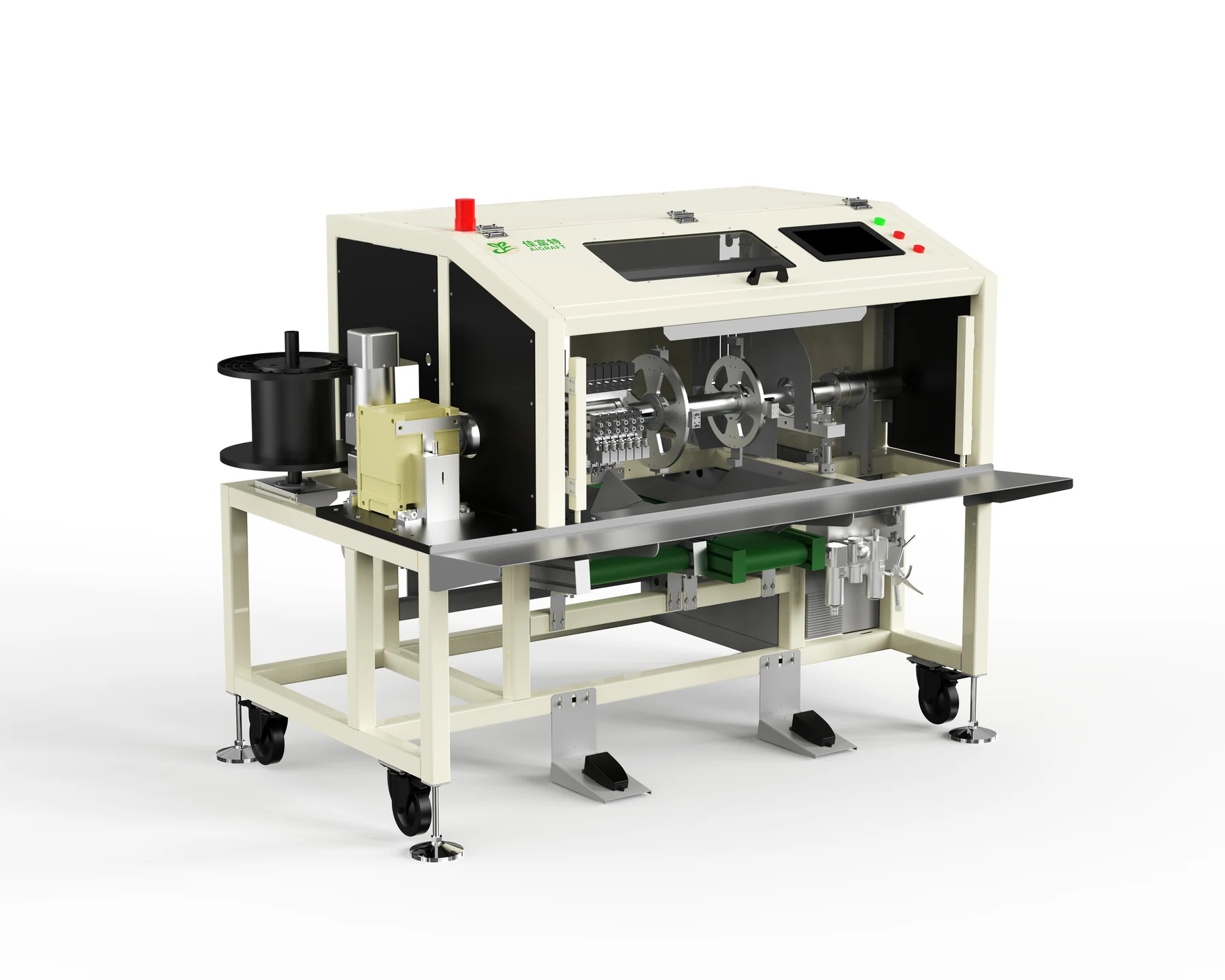
For the AiGRAFT operating arrangement supplied for this project, one semi-automatic grafting workstation uses three direct positions:
- One operator feeds rootstock seedlings.
- One operator feeds scion seedlings.
- One operator collects finished grafted seedlings and loads them into trays.
The current AiGRAFT grafting page lists a rated capacity of 1,200 seedlings per hour for the JFT-B1200TA. That rating is a machine specification, not a prediction of accepted shift output. Actual accepted output depends on seedling uniformity, operator loading rhythm, crop, setup and workflow conditions.
Four Connected Workstations
In the supplied four-machine configuration, the direct active-line arrangement is:
- eight seedling feeders: four for rootstock and four for scion;
- one shared operator collecting and loading finished grafted seedlings;
- nine direct positions in total while the four stations are running.
Sharing the collection position is possible because finished output from the four stations is organized into one collection workflow. It should still be validated at the required production rate. If collection cannot keep pace, the entire line can be constrained even when every grafting station is cycling correctly.
AiGRAFT’s Integrated Seedling Grafting Production Line describes modular arrangements using multiple semi-automatic stations. The final station count, layout and operator arrangement require technical review.
Roles Outside the Nine Direct Positions
The nine-position example does not automatically include:
- workers selecting and staging rootstock and scion trays;
- clip and consumable supply;
- finished-tray movement to the healing area;
- quality sampling;
- blade changes, sanitation or cleaning;
- line supervision;
- maintenance response;
- break relief.
These roles may be shared with other nursery work, but they still consume labor-hours. Excluding them makes machine-to-machine comparisons unreliable.
A Practical Formula for Operators per Shift
The following method can be used for an automatic seeding line, grafting station, grading machine or automatic seedling transplanter.
Step 1: Map Every Manual Touchpoint
Start one batch before the machine and finish one batch after it. Record every human action: opening seed packages, staging trays, loading seedlings, pressing confirmations, clearing rejects, replacing consumables, collecting finished trays, cleaning and moving output.
Mark which actions are continuous, periodic or event-driven.
Step 2: Measure Manual Seconds per Unit
For repeated tasks, measure the average manual time per accepted plant or tray under representative production conditions. Do not time only the most uniform batch.
Use this starting calculation:
Station load = accepted units per hour × manual seconds per unit ÷ 3,600
A station load above 1.0 means one person cannot complete that work within one clock hour. A load below 1.0 does not automatically mean the role can be combined with another job; the two tasks may occur at the same moment.
Step 3: Add Batch and Shared Work
Add labor for activities measured per batch or per changeover:
- crop and tray setup;
- seed, clip or donor-plant replenishment;
- cleaning and sanitation;
- sample inspection;
- reject removal;
- tooling changes;
- startup and shutdown;
- moving finished output.
Convert these activities into labor-hours per shift and keep them visible as support labor.
Step 4: Test Simultaneous Coverage
Build a short timeline of events around the line. If the same person is expected to refill material on one machine and unload another, test what happens when both requests occur together.
Buffers can make shared coverage practical. Without enough buffer capacity, small timing conflicts create machine waiting time.
Step 5: Add Shift Coverage Under Site Rules
After calculating positions and support hours, apply the nursery’s actual break, overtime, training and absence-coverage policy. This converts an equipment staffing diagram into a workable shift roster.
The final number should be validated through a timed trial using representative trays, seedlings, defect rates and operators.
Compare Machines Using Labor per Accepted Output
Machines should not be compared only by trays per hour or seedlings per hour. A stronger labor KPI is:
Accepted output per total labor-hour
“Total labor” should include direct operators and the portion of shared support time used by the line. Track at least these measures during a trial:
- accepted seedlings or trays per hour;
- direct labor-hours;
- shared support labor-hours;
- manual interventions per hour;
- time lost waiting for input or output handling;
- rejected or damaged plants;
- crop and tray changeover time;
- cleaning and sanitation time;
- unplanned stops and recovery time.
The USDA ARS record of the peer-reviewed nursery labor study shows why automation adoption matters in a labor-scarce industry. For an individual purchase, however, the decision should be based on site-level labor and accepted-output data.
How Integration Changes Staffing
Connecting machines can reduce repeated tray carrying and allow selected support tasks to be shared. Conveyors, tray buffers and coordinated output can change a group of standalone stations into one production line.
Integration also creates new responsibilities. Someone must understand line status, restart sequences, sensor or conveyor faults, changeover order and upstream-downstream coordination. A line may use fewer hands per accepted unit while requiring stronger technical supervision.
An automatic seedling grading machine, for example, can classify and route plants according to configured rules. Labor planning still needs to define who supplies incoming trays, handles each grade, removes rejects and responds when an output position is full.
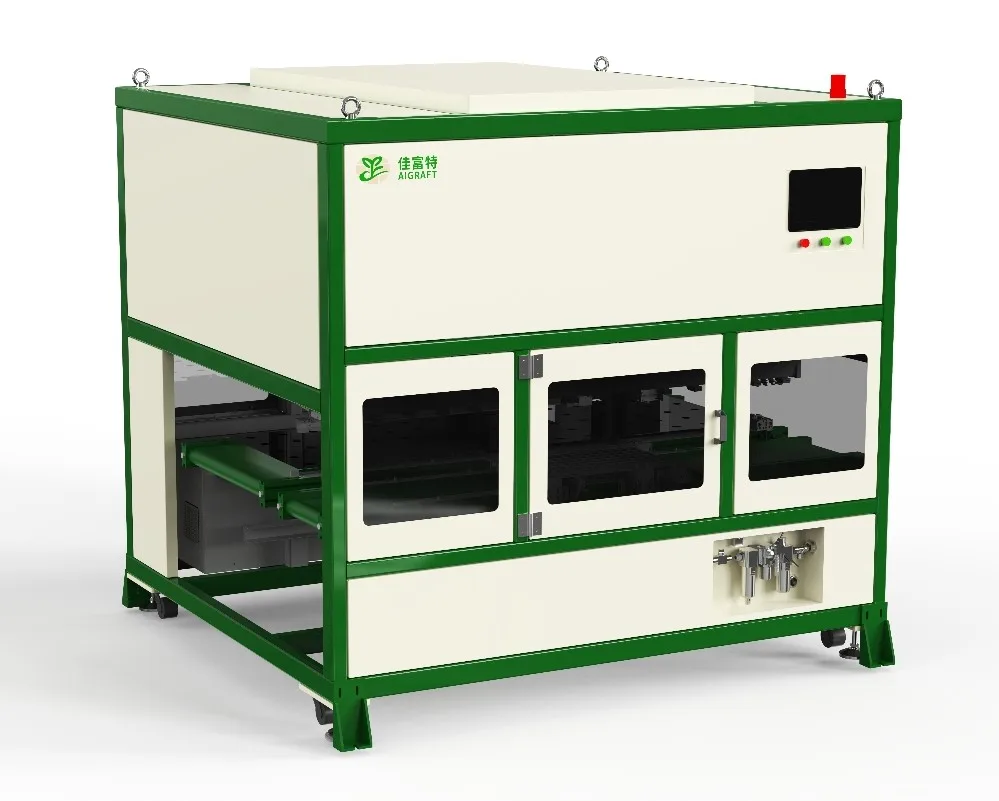
The University of Tennessee Extension publication on advances in automation within nursery tasks provides a useful framing: evaluate how much of each task is automated. For a production line, apply that question to every interface between machines.
Questions to Ask During a Machine Trial
Use the same operating assumptions when comparing suppliers. Ask for clear answers to these questions:
- Which tasks are included in the stated operator count?
- Are tray loading and unloading included?
- Who replenishes seed, substrate, clips, donor plants or empty destination trays?
- Does the quoted capacity refer to machine cycles or accepted output?
- What crop, tray, seedling condition and defect rate were used for the test?
- How often does the operator intervene during normal running?
- How long do crop, tray and tooling changeovers take, and how many people perform them?
- What daily cleaning, blade, gripper or sanitation work is required?
- Can one operator supervise multiple machines, and what buffer capacity makes that possible?
- What happens to output during a downstream stop?
- Which maintenance skills must be available on each shift?
- Can the supplier run a timed acceptance trial with the nursery’s representative material?
Do not accept “one operator” unless the supplier defines the machine boundary and lists every excluded task.
Information to Send for a Labor and Layout Review
Before requesting a recommendation, prepare:
- crop and variety;
- seedling age, size and condition;
- source and destination tray specifications;
- current process video from material preparation through finished output;
- current number of workers by task;
- actual accepted output per hour and per shift;
- target output and seasonal peak volume;
- planned working hours and number of shifts;
- facility drawing with machine, aisle and buffer space;
- current tray and material transport method;
- quality and reject criteria;
- available electrical supply and compressed air;
- cleaning, sanitation and maintenance requirements.
Review the AiGRAFT product range, then contact AiGRAFT with this information. A labor plan should be prepared together with the machine layout, because conveyor length, buffer location, tray direction and output routing can change staffing as much as the machine itself.
Frequently Asked Questions
Does an Automatic Nursery Machine Run Unattended?
Usually not. Even when the main process is automatic, people remain responsible for material preparation, supervision, output handling, quality checks, cleaning and fault recovery. The amount of continuous attention depends on the machine and line configuration.
How Many Workers Does a Semi-Automatic Grafting Machine Need?
For the AiGRAFT workstation arrangement described in this guide, one machine uses two seedling feeders and one finished-seedling collection operator. Other models and layouts may differ, so confirm the role definition and run a timed trial.
Can One Operator Supervise Several Nursery Machines?
Sometimes, especially when machines have stable automatic feeding, sufficient input and output buffers, and reliable alarms. The arrangement must be tested for simultaneous replenishment, unloading and fault events. A low average workload does not prove that one person can cover overlapping tasks.
Should Maintenance Staff Be Counted as Operators?
Keep maintenance as a separate labor category, but include the portion of maintenance time consumed by the equipment. This makes total labor-hour and operating-cost comparisons more accurate.
What Is the Most Useful Labor KPI for Comparing Equipment?
Accepted trays or seedlings per total labor-hour is more informative than catalog capacity alone. It connects usable output with direct operators, shared support work and intervention time.
Plan the Work Around the Whole Line
Automated nursery machines still need people, but those people should spend less time on the repetitive action the machine was selected to automate. The remaining team prepares biological material, keeps the line supplied, verifies quality, handles exceptions and maintains production flow.
Count those roles before approving the equipment layout. Separate direct positions from shared support and shift coverage. Then measure accepted output per total labor-hour using the nursery’s own trays, seedlings and operators. That is the operator number that belongs in a real production plan.